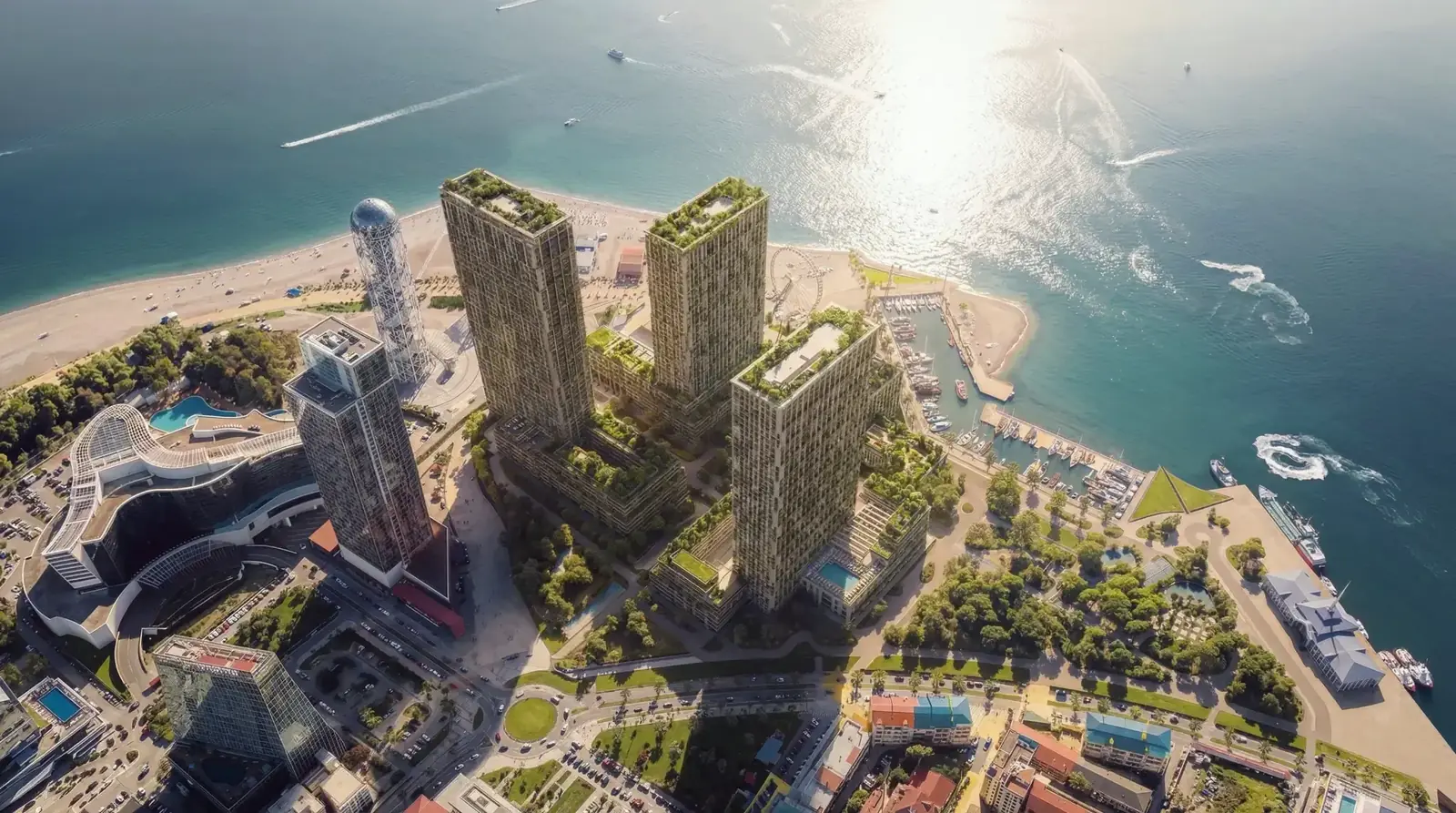
On Batumi sales decks, a double-digit return is often presented as though it were part of the unit itself — like floor area or a sea view. It is not. The figure may represent a corporate payment, a top-up to rental-pool income, a hotel forecast or a buyback clause. Each leaves the buyer with a different risk.
That distinction matters in a seasonal market. Galt & Taggart estimated Batumi rental yield at 7.1% in June 2026 and reported a 4.2% fall in average daily rent in the second quarter. A contractual 10% may still improve the deal, but it is primarily a claim against a named company. Market yield measures what the asset itself earns.
In Batumi, a guaranteed return is only as strong as the company that signs it.
01 · Structure
What is actually guaranteed.
Sales material uses one label for several financially different products. Before modelling the return, identify the source of the cash and who funds any shortfall when the property underperforms.
Fixed payment
A company pays a stated amount even when the room is empty. The owner is taking the payer’s credit risk.
Minimum with top-up
Actual rental income is calculated first; the company then tops it up to an agreed floor. The formula and top-up limit belong in the contract.
Rental pool
Revenue from a group of units is combined and distributed under a formula. Occupancy, room rates, costs and allocation rules drive the result.
Projected ROI
A financial model shows a possible outcome under stated assumptions. It does not, by itself, create a payment obligation.
Buyback
This is a separate right to resell the unit to a company on agreed terms. Its value depends on price, timing, refusal clauses and the buyer’s ability to pay.
02 · Public wording
Public figures and signed terms.
Very different claims sit side by side in the Batumi market. Wyndham Grand Batumi Gonio describes 10% as fixed income independent of occupancy. Grand Life advertises income of up to 14% and states that it is guaranteed by contract. Pontus Rotana, by contrast, expressly treats its published ROI, IRR and payback figures as forecasts rather than guaranteed outcomes. For a buyer, this is not a semantic distinction: the obligation must appear in the documents actually being signed.
These examples illustrate different offer structures; they are not a ranking of projects. For a transaction, the current documents presented for signature take precedence over a website or sales deck.

03 · Counterparty
Who must make the payment.
In practice, the promise is often signed by a project company — a separate legal entity created for one development. It may be connected to a recognised developer, operator or hotel brand, but that relationship does not automatically make any of them liable to the owner.
Check its company ID, assets, encumbrances and the director’s authority.
Without a direct obligation to the owner, it is not the debtor.
Look for the brand’s signature or a separate guarantor.
Check the amount, expiry, irrevocability and claim procedure.
A well-drafted claim is still not the same as cash in the bank. If the obligor has few liquid assets, enforcement can take years. The contract therefore needs to be read alongside the payer’s financial profile and the assets from which a judgment could realistically be satisfied.
Interactive calculation
Stress-test the advertised 10%.
This illustration shows how the wait for the first payment and contractual deductions change the headline rate. It is not a forecast for a specific project.
Contracted payment total$30,000
Amount after deductions$21,000
Simple return over the full period6.0%
04 · Calculation base
The base behind the percentage.
Calculation bases vary more often than Batumi sales material suggests. Some agreements apply the rate to the full price; others exclude furniture and fit-out. The base may also be the amount already paid or the price after discount. The drafting should leave only one possible answer.
The second variable is the accrual date. In Batumi hotel projects, it may be tied to full payment, title registration, handover or the hotel opening — events that can be years apart. If the first payment comes after a two-year wait and 10% is then paid for three years, the owner receives $30,000 over five calendar years. The simple return on the original investment is 6% a year before the time value of money.
05 · Cash left
Gross and net return.
The income figure often sits in the sale contract while the costs sit in a separate management agreement. Read them together. The deduction list should be closed: management, service charges, furniture reserve, repairs, insurance, booking and bank fees, tax and any cost attached to owner use.
Georgia’s special 5% rate may apply to an individual’s income from residential premises rented for residential use. A hotel-pool distribution or a separate guarantee is a different structure and may be taxed differently. The treatment should be checked against the actual contracts, not the wording in a brochure.
06 · Benchmark
Comparison with the market.
The 7.1% market estimate describes rental economics derived from purchase prices and actual rents. A contractual 10% describes a claim against a company. The two can sit in the same comparison only after the calculation base, holding period and full cost treatment have been aligned.
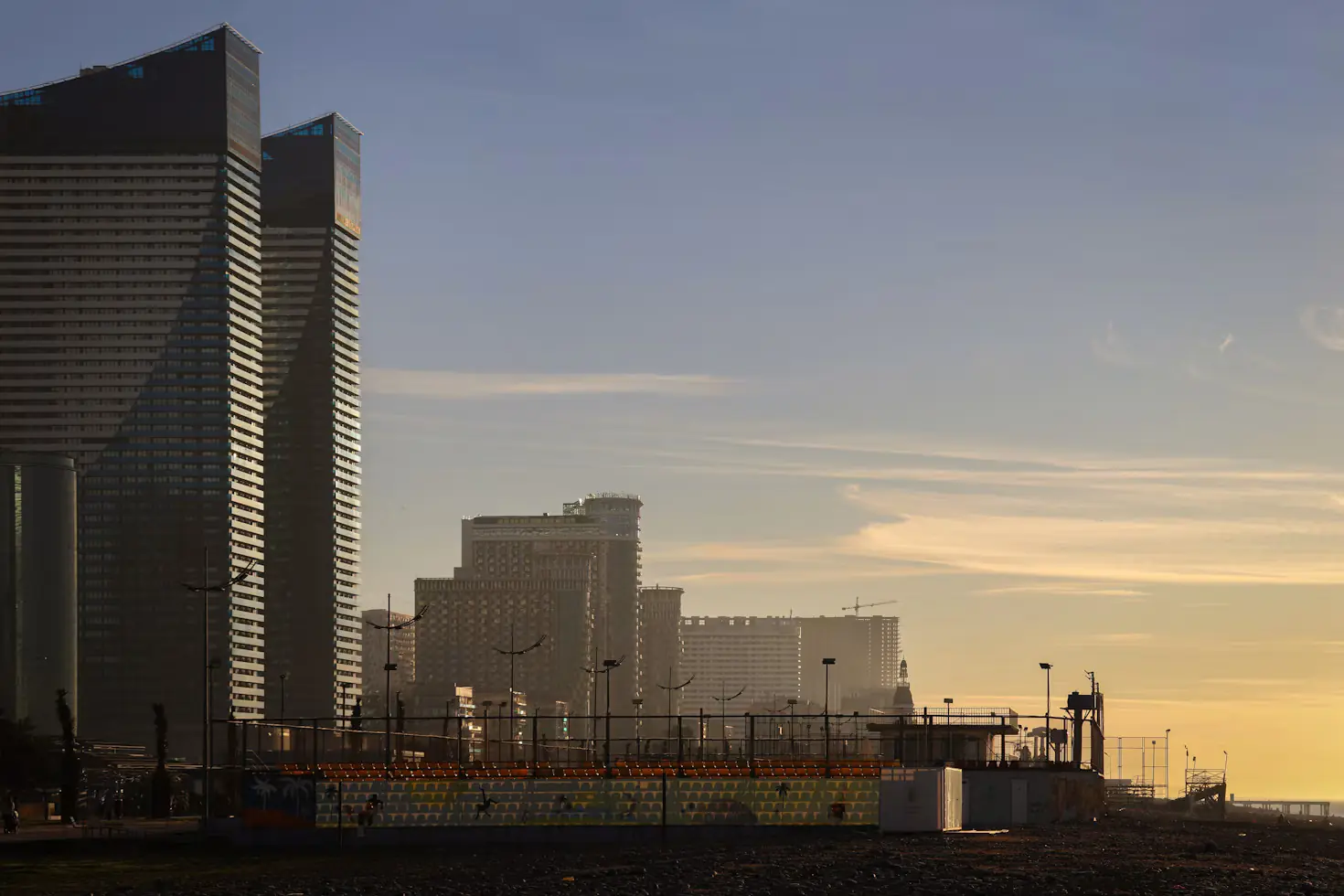
Average branded-hotel occupancy in Batumi reached 73.6% in 2025. Across Georgia, occupancy ranged from 35.8% in January to 79% in August. Yet occupancy belongs to the hotel, not to the owner of one room. Management, staff, utilities, sales, repairs and shared infrastructure still sit between room revenue and the owner’s distribution.
07 · Beyond the programme
What happens after the guarantee.
A three-year support programme usually covers only a small part of the holding period. When it ends, the owner is left with the address, the unit, the management agreement and the market. Seasonal occupancy, achievable room rates, operating costs, reserves and new competition therefore need to be modelled before purchase. So do the right to leave the rental pool and the transfer of the management agreement on resale.

If the numbers work only while the guarantee is in place, the investor is buying counterparty risk rather than a durable rental asset.
08 · Due diligence
Twelve questions for the agreement.
These questions should be answered before a reservation deposit is paid, not on signing day.
01Which legal entity must pay?+
Record the full legal name, company ID, address, signatory authority and the document that creates the obligation.
02Are the operator, brand or parent company parties?+
If they have not signed, a logo or reference in a brochure does not make them liable for payment.
03What amount forms the calculation base?+
Check whether furniture, fit-out, VAT and discounts are included and whether only paid-in funds count.
04When does accrual begin?+
Tie the date to an objective event and state what happens if construction, handover or opening is delayed.
05How long does the guarantee last?+
Specify exact dates, extension rights, early termination and the deadline for the final payment.
06Is the income fixed, conditional or a top-up?+
The structure determines who funds a shortfall and who carries the operating risk.
07Is the rate gross or net?+
List every deduction and limit the manager’s right to introduce new charges.
08Which currency and exchange rate apply?+
Check the obligation currency, payment currency, conversion date and source of the exchange rate.
09Is there independent security?+
A guarantee, surety, pledge or reserve needs an amount, expiry date and workable claim procedure.
10When may payments be suspended?+
The exceptions should be closed: force majeure, buyer default, operator replacement and property closure.
11How do owner use and resale affect the guarantee?+
Check blackout dates, day limits and whether the rights transfer automatically to a new owner.
12What follows the guarantee, and where are disputes heard?+
Set out the post-programme income formula, fees, exit rights, governing law and chosen court or arbitration forum.
09 · The BUC view
Underwrite the asset. Then add the guarantee.
BUC does not use a guaranteed payment as a substitute for an operating case. We first model the apartment or hotel unit as an ordinary rental asset, using seasonal occupancy, achievable rates and the full cost base. Only then do we add the contracted payment and measure what it changes.
An investable deal does not have to be risk-free. But the buyer should know exactly what the higher return is paying for: a wait before opening, weak underlying economics, the credit risk of a project company or restrictions in the management agreement. That premium should be visible in the price.
A percentage in a sales deck is a reason to open the contract, not to pay a deposit.