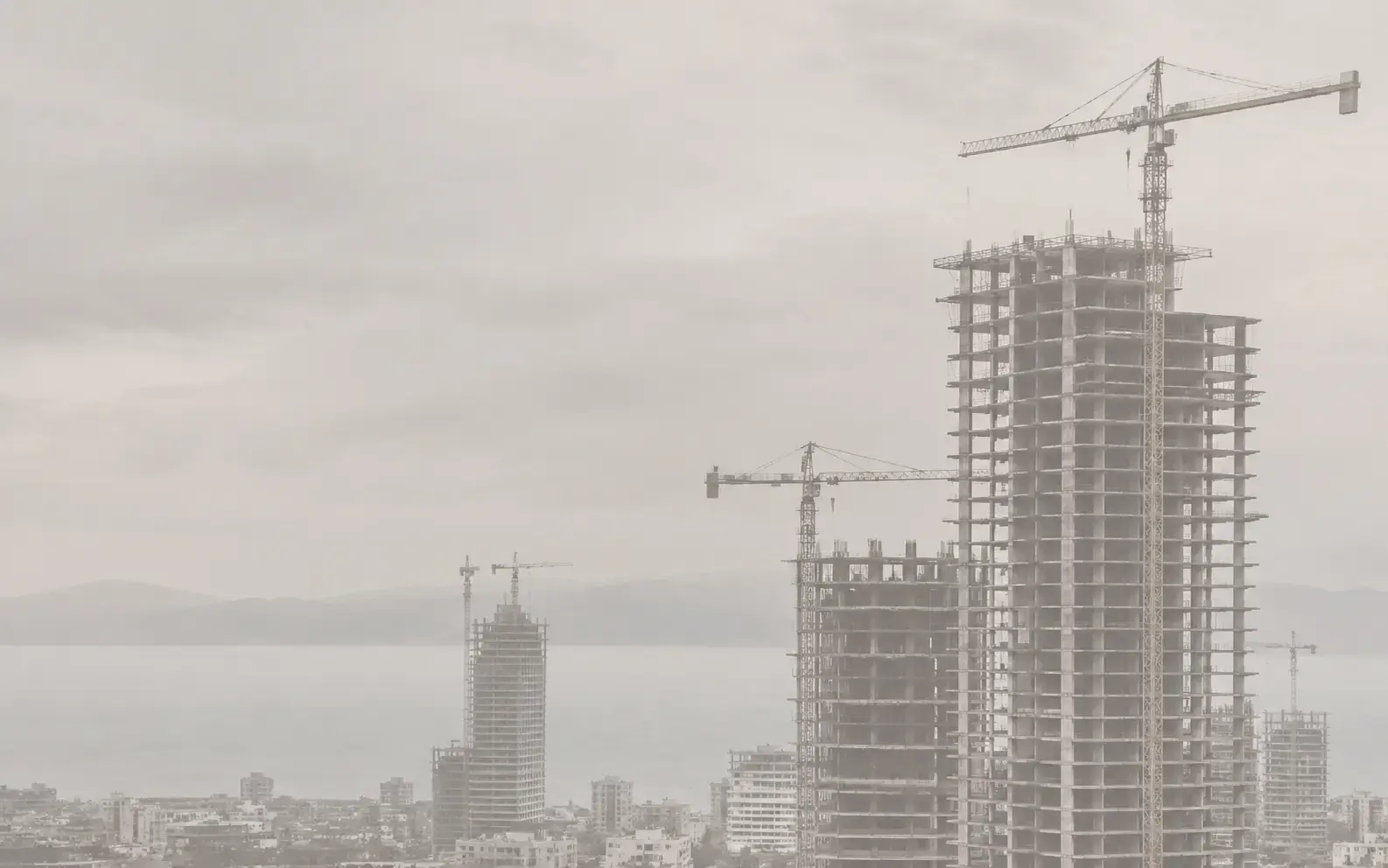
A rising market is easy to describe. It is harder to read correctly. Batumi closed the second quarter of 2026 with more apartment transactions and another increase in asking values. That is the headline. The more important story is what sits underneath it: demand is split across two very different markets, new-build inventory is heavy and rental economics are no longer improving at the same speed as prices.
For buyers, this changes the question. “Will Batumi grow?” is no longer enough. The useful question is whether a specific apartment, in a specific project, can defend its premium through location, product quality, management and future resale demand.
01 · The numbers
Growth, with a warning label.
Galt & Taggart’s latest quarterly review describes demand as solid, while pointing to persistent oversupply pressure. The apparent contradiction is the central fact of the market: Batumi can sell more apartments and still leave buyers with more project risk.
02 · Demand
One market. Two signals.
Public Registry data recorded 2,200 secondary-market transactions in the quarter, up 13.4% year on year. Registered primary sales were 1,968, down 5.3%. Taken alone, that would suggest that buyers are moving away from developers.
But primary registrations are delayed, so they do not show the market in real time. Galt & Taggart’s direct survey of selected developers reported primary sales up 35.1% year on year in 2Q26 and 47.9% across the first half. The correct reading is not that one dataset is wrong; it is that they observe different moments in the same sales cycle.
Demand exists. The risk is assuming that demand is distributed evenly across every new project entering the skyline.
The same developer survey found Georgian citizens represented 33% of purchases in 1H26. In other words, international buyers accounted for roughly two-thirds of sales in the surveyed projects. That is a source of depth, but also of sensitivity to exchange rates, international marketing and confidence in delivery.
03 · Prices
The new-build premium is now material.
In June, the average turnkey primary-market price reached $1,960 per square metre. The comparable secondary-market figure was $1,497. That places the average new-build premium at approximately 31%.
A premium is not automatically overpricing. New construction can offer better engineering, payment terms, amenities and management. But those benefits must be specific and defensible. A glossy lobby and a long amenities list are not enough to carry a 31% gap at resale.
04 · Geography
Batumi is not one price.
Average citywide numbers are useful for direction, not selection. The spread between neighbourhoods is already wide enough to change the investment case completely.
Old Batumi commands scarcity pricing. Gonio–Kvariati and Alley of Heroes sit above the city average for different reasons: one sells a coastal resort narrative, the other urban scale and new infrastructure. New Boulevard remains the volume centre, with 1,664 transactions in 2Q26, but volume also means more comparable units competing for tenants and future buyers.
05 · Rental economics
Yield remains attractive. The easy story is fading.
Estimated rental yield stood at 7.1% in June, high relative to several peer coastal cities in Galt & Taggart’s comparison. Yet average daily rent declined 4.2% during the quarter while primary prices continued to rise.
That divergence matters. If acquisition prices rise faster than achievable rent, headline yield eventually compresses. The properties best placed to resist that pressure will not simply be close to the sea. They will have a clear guest profile, professional operations, differentiated views or layouts, and costs that remain sensible after management, maintenance and seasonality.
06 · The BUC view
Buy a project, not a market.
Batumi’s 2Q26 data is constructive, but it does not validate every launch. Rising sales show that the city continues to attract capital. High inventory and a widening primary-market premium show that selection now matters more than momentum.
Scarcity
What will remain genuinely difficult to replicate when nearby projects are completed?
Delivery
Does the developer have the capital, documentation and execution record to finish the promise?
Rental logic
Who is the real tenant, in which season, at what net rate after every operating cost?
Exit liquidity
Who is likely to buy this unit from you in three to five years—and why this one?
The market is growing. The margin for lazy decisions is shrinking. That is not a bearish conclusion; it is a more mature one.